Everyone's Borrowing Zeus's Thunder: Inside the Greek Mythology Slot Gold Rush
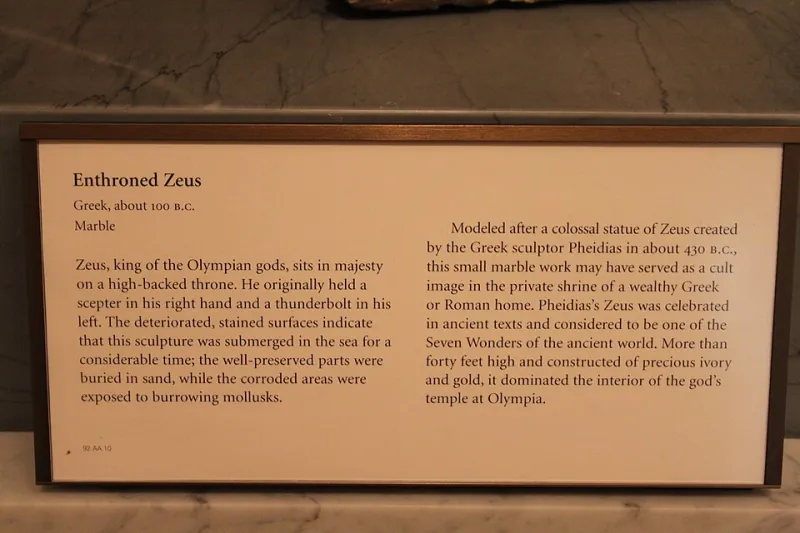
Photo: Gary Todd from Xinzheng, China, CC0, via Wikimedia Commons
Open any US mobile casino app and count the beards. Not on the players — on the reels. White-haired gods, marble columns, golden laurels, lightning bolts streaking across loading screens. Within thirty seconds you'll have passed half a dozen games that all look like they were designed by the same person who really, really loves Greek mythology. And in a way, they were — because the entire industry is chasing one game's coattails.
How One Slot Became a Blueprint
The story starts with a simple formula that turned out to be printing money. Take a tumbling-reels mechanic where winning symbols explode and new ones fall in. Sprinkle in random multiplier orbs that can stack. Wrap the whole thing in Mount Olympus dressing. The result was a game so successful that it didn't just top charts — it rewired what studios believe players want.
The numbers did the talking. The original Gates of Olympus and its predecessor Gates of Valhalla built a following that most licensed, movie-branded slots never come close to matching. And unlike a branded slot, there were no licensing fees, no Hollywood middlemen, no contract renewals. Just public-domain mythology and proprietary math. Every studio accountant in the country looked at that margin and had the same thought.
The Clone Hierarchy
Here's the thing about a gold rush, though: most of the prospectors go home broke. The mythology slot wave has produced everything from genuine innovation to shameless asset-flips, and it helps to sort them into tiers.
The mechanical innovators. These are the studios that took the core idea — cascading wins, escalating multipliers — and actually pushed it somewhere new. Duel-format games where you choose between god factions. Cluster-payers with expanding grids. Games where the mythology isn't a skin but the actual mechanic, with different deities triggering different features. These titles deserve their shelf space.
The theme-swappers. This is the middle tier, and it's crowded. The gameplay is a recognizable variation on the tumbles-and-multipliers formula, but the packaging changes: Norse gods one month, Egyptian deities the next, a brief detour through Roman pantheons. These games are fine. They're also forgettable. They exist because the formula works, not because anyone had something to say.
The knockoffs. And then there's the bottom shelf. Games with names that are legally-distinct-but-barely versions of famous titles. Art that looks like it was generated from a screenshot. RTPs that mysteriously run two points lower than the games they're imitating. These exist purely to catch players who aren't paying attention — the mobile equivalent of a gas-station energy drink called "Lighting Bolt."
Why Zeus Specifically?
It's fair to ask why the thunder god became the industry's default mascot rather than, say, Poseidon or Hades. A few reasons stack up. Lightning is visually perfect for slot design — it reads instantly at thumbnail size on a phone screen, it pairs naturally with gold and electric-blue color schemes, and it maps neatly onto the whole concept of a sudden big win. A bolt from the blue is literally what every slot player is shopping for.
There's also the public-domain advantage. Nobody owns Zeus. A studio can build an entire catalog around Greek mythology without paying a cent in licensing, which is exactly what's happened. Compare that to branded slots based on movies or TV shows, where the rights fees eat into both the studio's margin and — often — the game's RTP.
The Fatigue Is Real
But trends don't run forever, and there are signs the mythology gold rush is cresting. Player forums have gotten openly sarcastic about the third Gates clone of the month. US-facing lobbies are so saturated that genuinely good mythology games are drowning next to the filler. And the studios with actual creative ambitions have started quietly pivoting — toward Asian-themed mechanics, toward retro fruit-machine revivals, toward original IP with distinctive art styles.
What happens next probably looks like consolidation rather than extinction. Mythology slots aren't going away — the theme is too durable and the math too proven. But the era of lazy reskins printing money is likely ending, because US mobile players are getting more discriminating. They check RTPs now. They read reviews. They can spot a asset-flip from the app store icon.
What This Means for Players
The practical lesson is simple: the clone flood makes brand recognition matter more, not less. Stick with studios that publish their math. Favor games that use the mythology to do something mechanically interesting rather than as wallpaper. And when a new thunder god shows up in your casino lobby, ask the only question that matters — what does this game do that the last fifty didn't?
The gods gave the industry a gift. The studios that used it well earned your spins. The rest are just standing in the rain.